|
|
|
|
|
|
This article may be reprinted free of charge provided 1) that there is clear attribution to the Orthomolecular Medicine News Service, and 2) that both the OMNS free subscription link http://orthomolecular.org/subscribe.html and also the OMNS archive link http://orthomolecular.org/resources/omns/index.shtml are included.
Beyond Alzheimer's Drugs: China's Prevention Medicine AwakeningAn Orthomolecular Systems Medicine Perspective on Cognitive Health and Chronic Disease PreventionBy Patrick Holford and Richard Z. Cheng, MD, PhD If there is one country that urgently needs effective strategies to prevent Alzheimer's disease and cognitive decline, it is China. China's rapidly aging population now exceeds 310 million people over the age of 60, representing more than one-fifth of the nation's population. The number is expected to continue rising substantially over the coming decades [1, 2]. Recent projections suggest that China may have approximately 20 million people living with Alzheimer's disease and related dementias by 2030 [3]. The potential economic and social burden is enormous. Yet what is striking is not simply the scale of the challenge-but the seriousness with which prevention is now being discussed. In China, older adults are increasingly referred to not as "elderly," but as the "silver-haired population," reflecting a more positive and active view of aging. Prevention-focused public health initiatives targeting this population are expanding rapidly. At the recent 2nd Silver-Haired Healthy Lifestyle Science Popularization Conference in Nanjing, China, attended by approximately 2,500 participants, with broader public outreach through television and digital media. Physicians, nutrition experts, gerontology specialists, and public health officials gathered to discuss practical prevention strategies for cognitive decline and chronic disease. The overall message was remarkably consistent:
Dr. Zhang Lei, a well-known physician and public health advocate involved in the conference, summarized the philosophy succinctly: "Prevention is the cure." This prevention-oriented approach contrasts sharply with the increasingly pharmaceutical-centered strategy dominating much of the Western Alzheimer's discussion. At the conference, there was substantial interest in nutrition-based and lifestyle-based approaches to cognitive resilience, including the role of omega-3 fatty acids, phospholipids, B vitamins, exercise, sleep, and personalized behavioral interventions. Patrick Holford emphasized the essential biological interdependence of omega-3 fatty acids, phospholipids, and B vitamins in brain structure and function. These nutrients are not isolated "supplements," but fundamental building blocks required for neuronal integrity, membrane function, methylation, neurotransmission, and long-term cognitive resilience [4-7]. 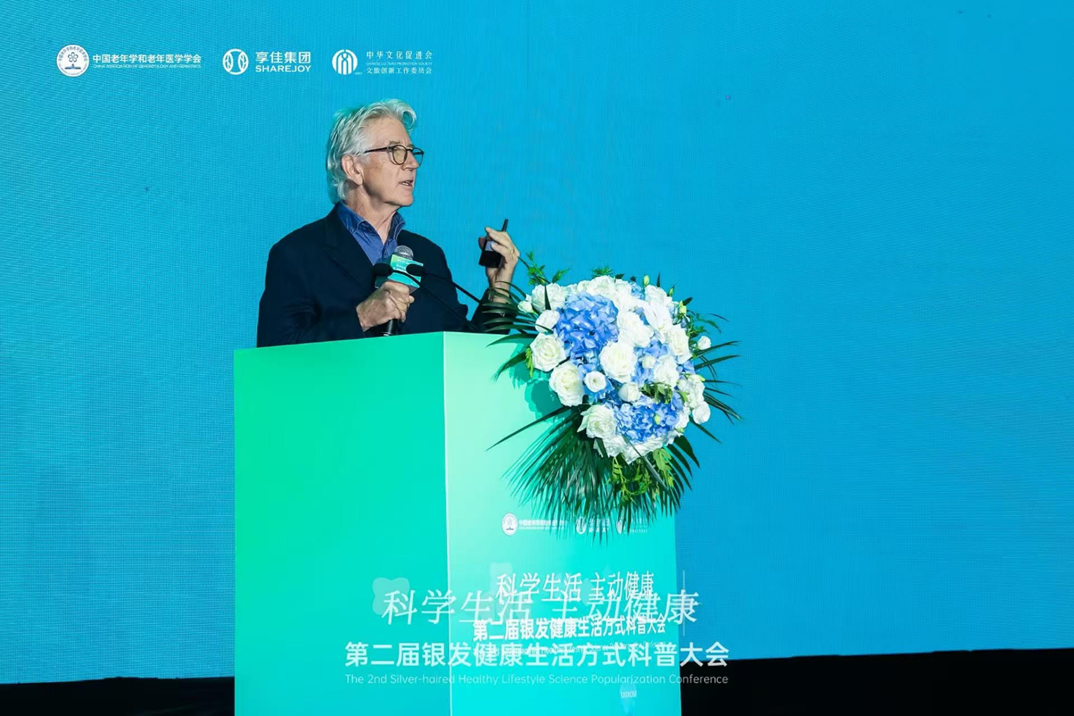
Figure 1. Patrick Holford speaking at the 2nd Silver-Haired Healthy Lifestyle Science Popularization Conference in Nanjing, China (May 2026). Importantly, Chinese public health experts also showed strong interest in scalable digital prevention tools, including cognitive assessment platforms and personalized prevention strategies delivered through smartphones and digital health networks. This reflects an important shift toward systems-level prevention medicine-combining nutrition, lifestyle, behavioral science, and personalized risk assessment rather than relying exclusively on late-stage pharmaceutical intervention. One of the most striking themes throughout the conference was the openness toward nutrition and preventive medicine. Unlike in many Western settings, there appeared to be little hostility toward nutritional supplementation or lifestyle-based prevention approaches. Traditional Chinese perspectives that view food and lifestyle as foundational to health may partially explain this openness. Beyond Alzheimer's DiseaseThe implications extend far beyond Alzheimer's disease. Cognitive decline, metabolic dysfunction, cardiovascular disease, diabetes, obesity, and many chronic degenerative disorders increasingly appear interconnected through shared biological pathways involving nutrition, inflammation, vascular integrity, metabolic health, mitochondrial function, toxicological burden, microbiome disruption, sleep impairment, and lifestyle-related factors [8-14]. While omega-3 fatty acids, phospholipids, and B vitamins represent important nutritional foundations, an Integrative Orthomolecular Systems Medicine (IOM Systems Medicine) perspective suggests that cognitive decline rarely results from a single nutrient deficiency or isolated pathway. Rather, Alzheimer's disease and related neurodegenerative disorders may emerge from the cumulative effects of multiple upstream disturbances-including metabolic dysfunction, nutrient insufficiency, chronic inflammation, toxicological burden, sleep disruption, microbiome imbalance, hormonal dysregulation, psychosocial stress, and loss of metabolic resilience. An important implication of this systems-oriented framework is what IOM Systems Medicine describes as the Nutrient Demand Principle [15-17]. Biological stressors-including aging, chronic inflammation, metabolic dysfunction, toxicological burden, infection, psychological stress, and neurodegeneration itself-may substantially increase the body's demand for essential nutrients. Under such circumstances, nutrient requirements necessary to restore optimal physiological function may exceed conventional dietary recommendations. This principle helps explain why some individuals may benefit from higher intakes of nutrients such as omega-3 fatty acids, vitamin D, vitamin C, magnesium, thiamine, and other orthomolecular interventions when guided appropriately by clinical assessment and monitoring. From an IOM Systems Medicine perspective, preservation of cognitive function may also depend on maintaining metabolic resilience-the capacity to efficiently generate and utilize energy under conditions of physiological stress. Loss of metabolic resilience may contribute not only to obesity and type 2 diabetes, but also to age-related cognitive decline and neurodegenerative disease. From this perspective, Alzheimer's disease may be viewed not simply as a disorder of the brain, but as a downstream manifestation of broader systems dysfunction affecting the entire organism (Fig. 2). 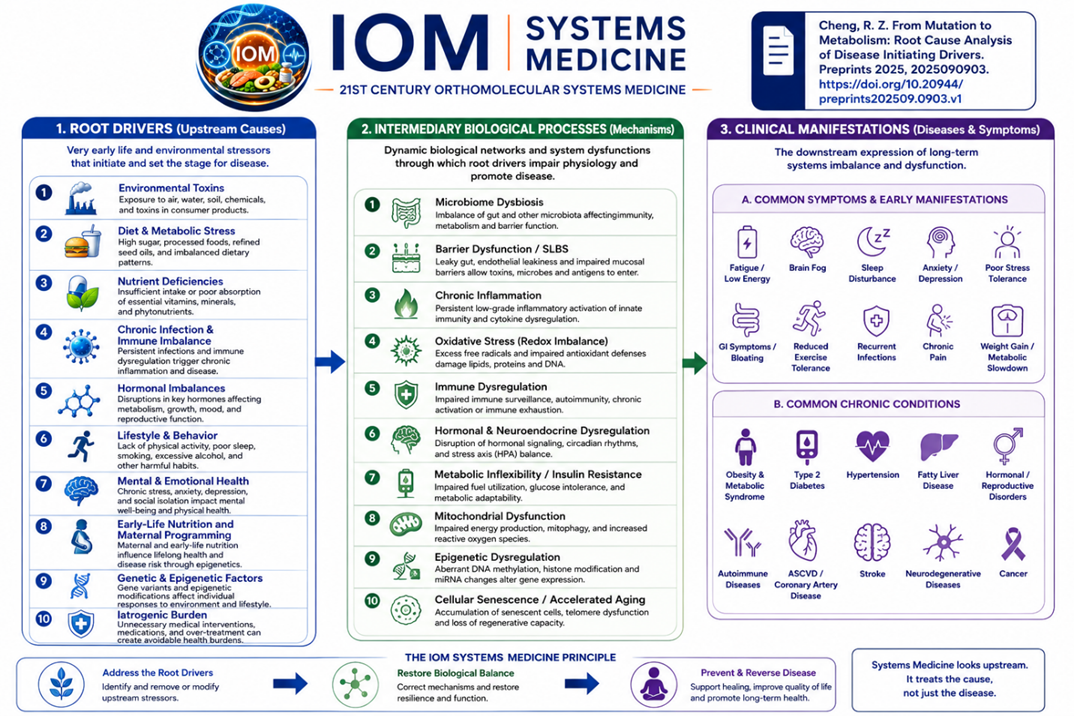
Figure 2. IOM Systems Medicine Framework illustrating upstream root drivers, intermediary biological processes (mechanisms), and downstream clinical manifestations of chronic disease. Developed by Richard Z. Cheng, MD, PhD. This systems-oriented framework shifts the focus from late-stage disease treatment toward earlier identification and correction of upstream biological disturbances before irreversible degeneration occurs. Barrier dysfunction may represent a particularly important and underappreciated contributor to chronic disease. The IOM Systems Medicine framework describes this broader phenomenon as Systemic Leaky Barrier Syndrome (SLBS) [13], in which disruption of the intestinal barrier, blood-brain barrier, vascular endothelium, and other biological barriers may contribute to chronic inflammation, immune dysregulation, and progressive tissue dysfunction throughout the body. Within this framework: Upstream Root Drivers
Intermediary Biological Processes
Clinical ManifestationsThese disturbances may ultimately contribute to:
In this sense, prevention is not merely about avoiding one disease. It is about preserving systemic resilience. A Global QuestionThe challenge now facing all nations is whether healthcare systems will continue emphasizing late-stage disease management, or whether they will seriously invest in upstream prevention, public education, and systems-oriented health strategies. China's emerging "silver-haired" prevention movement may represent one of the earliest large-scale public experiments in this direction. If successful, it could provide important lessons for the rest of the world. The ultimate goal is not merely the prevention of Alzheimer's disease. It is the preservation of the body's capacity to generate energy, maintain structural integrity, repair damage, adapt to stress, and sustain cognitive function throughout life. In this sense, healthy aging is fundamentally a systems-level process. The future of healthcare may depend less on finding the next Alzheimer's drug-and more on understanding how to preserve the biological systems that keep the brain healthy in the first place. Patrick Holford is founder of the Food for the Brain Foundation and author of Alzheimer's: Prevention is the Cure. Richard Z. Cheng, MD, PhD is Editor-in-Chief of the Orthomolecular Medicine News Service (OMNS), Board Director of the Riordan Clinic, and founder of the Integrative Orthomolecular Systems Medicine (IOM Systems Medicine) framework. About OMNS InteractiveOMNS Interactive is the discussion and commentary platform of the Orthomolecular Medicine News Service (OMNS), featuring perspectives on orthomolecular medicine, nutrition, metabolism, chronic disease, healthy aging, and systems medicine. The original OMNS website remains the official archive of OMNS publications. Subscribe to OMNS Interactive for future articles, commentary, and discussions: Content is provided for educational purposes only and does not constitute medical advice.

References1. Statistical Communiqué of the People's Republic of China on the 2024 National Economic and Social Development. Available online: https://english.www.gov.cn/archive/statistics/202503/01/content_WS67c2695cc6d0868f4e8f02ae.html (accessed 29 May 2026). 2. World Population Prospects 2024 | Population Division. Available online: https://www.un.org/development/desa/pd/world-population-prospects-2024 (accessed 29 May 2026). 3. GBD 2019 Dementia Forecasting Collaborators Estimation of the Global Prevalence of Dementia in 2019 and Forecasted Prevalence in 2050: An Analysis for the Global Burden of Disease Study 2019. Lancet Public Health 2022, 7, (2), e105-e125. DOI: 10.1016/S2468-2667(21)00249-8. 4. Yurko-Mauro, K.; McCarthy, D.; Rom, D.; et al. Beneficial Effects of Docosahexaenoic Acid on Cognition in Age-Related Cognitive Decline. Alzheimers Dement 2010, 6, (6), 456-464. DOI: 10.1016/j.jalz.2010.01.013. 5. Morris, M.C.; Evans, D.A.; Bienias, J.L.; et al. Dietary Intake of Antioxidant Nutrients and the Risk of Incident Alzheimer Disease in a Biracial Community Study. JAMA 2002, 287, (24), 3230-3237. DOI: 10.1001/jama.287.24.3230. 6. Smith, A.D.; Refsum, H. Homocysteine, B Vitamins, and Cognitive Impairment. Annu Rev Nutr 2016, 36, 211-239. DOI: 10.1146/annurev-nutr-071715-050947. 7. Alzheimer's: Prevention Is the Cure: Patrick Holford: 9781927017418: Amazon.Com: Books. Available online: https://www.amazon.com/Alzheimers-Prevention-Cure-Patrick-Holford/dp/1927017416/ref=asc_df_1927017416?tag=bingshoppinga-20&linkCode=df0&hvadid=80470717337125&hvnetw=o&hvqmt=e&hvbmt=be&hvdev=c&hvlocint=&hvlocphy=79759&hvtargid=pla-4584070206422289&psc=1&msclkid=6bd597ae4ddb1ae8cfd9fdb7e1c3c397 (accessed 29 May 2026). 8. Livingston, G.; Huntley, J.; Liu, K.Y.; et al. Dementia Prevention, Intervention, and Care: 2024 Report of the Lancet Standing Commission. Lancet 2024, 404, (10452), 572-628. DOI: 10.1016/S0140-6736(24)01296-0. 9. Cunnane, S.C.; Trushina, E.; Morland, C.; et al. Brain Energy Rescue: An Emerging Therapeutic Concept for Neurodegenerative Disorders of Ageing. Nat Rev Drug Discov 2020, 19, (9), 609-633. DOI: 10.1038/s41573-020-0072-x. 10. Jacka, F.N.; O'Neil, A.; Opie, R.; et al. A Randomised Controlled Trial of Dietary Improvement for Adults with Major Depression (the "SMILES" Trial). BMC Med 2017, 15, (1), 23. DOI: 10.1186/s12916-017-0791-y. 11. Monte, S.M. de la Insulin Resistance and Alzheimer's Disease. BMB Rep 2009, 42, (8), 475-481. DOI: 10.5483/bmbrep.2009.42.8.475; Available online: https://pubmed.ncbi.nlm.nih.gov/19712582/. 12. Cheng, R.Z. Type 2 Diabetes as a Systems-Level Disorder: A Root Driver Model Integrating Metabolic, Nutritional, Hormonal, and Environmental Determinants. 2026. DOI: 10.20944/preprints202604.0801.v1; Available online: https://www.preprints.org/manuscript/202604.0801. 13. Cheng, R.Z. Systemic Leaky Barrier Syndrome (SLBS): A Systems-Level Framework for Chronic Disease. 2026. DOI: 10.20944/preprints202602.0069.v2; Available online: https://www.preprints.org/manuscript/202602.0069. 14. Cheng, R.Z. What Are Humans Designed to Eat? An IOM Systems Medicine Framework for Dietary Compatibility, Nutrient Density, and Toxicological Burden. 2026. DOI: 10.20944/preprints202605.0616.v1; Available online: https://www.preprints.org/manuscript/202605.0616. 15. Lonsdale, D.; Marrs, C. Thiamine Deficiency Disease, Dysautonomia, and High Calorie Malnutrition; Academic Press, London, England, 2017. 16. Pauling, Linus How to Live Longer and Feel Better; W. H. Freeman and Company, New York, 1986. 17. Overton, E. The Transformative Effects of High-Dose Thiamine Therapy: Dr Derrick Lonsdale's Legacy. Orthomolecular Medicine News Service 2025, 21, (16).; Available online: https://orthomolecular.org/resources/omns/v21n16.shtml. Orthomolecular MedicineOrthomolecular medicine uses safe, effective nutritional therapy to fight illness. For more information: http://www.orthomolecular.org Find a DoctorTo locate an orthomolecular physician near you: http://orthomolecular.org/resources/omns/v06n09.shtml The peer-reviewed Orthomolecular Medicine News Service is a non-profit and non-commercial informational resource. Editorial Review Board:
Jennifer L. Aliano, M.S., L.Ac., C.C.N. (USA)
Comments and media contact: editor@orthomolecular.org OMNS welcomes but is unable to respond to individual reader emails. Reader comments become the property of OMNS and may or may not be used for publication. To Subscribe at no charge: https://www.orthomolecular.org/subscribe.html To Unsubscribe from this list: https://www.orthomolecular.org/unsubscribe.html |

This website is managed by Riordan Clinic
A Non-profit 501(c)(3) Medical, Research and Educational Organization
3100 North Hillside Avenue, Wichita, KS 67219 USA
Phone: 316-682-3100; Fax: 316-682-5054
© (Riordan Clinic) 2004 - 2024c
Information on Orthomolecular.org is provided for educational purposes only. It is not intended as medical advice.
Consult your orthomolecular health care professional for individual guidance on specific health problems.
